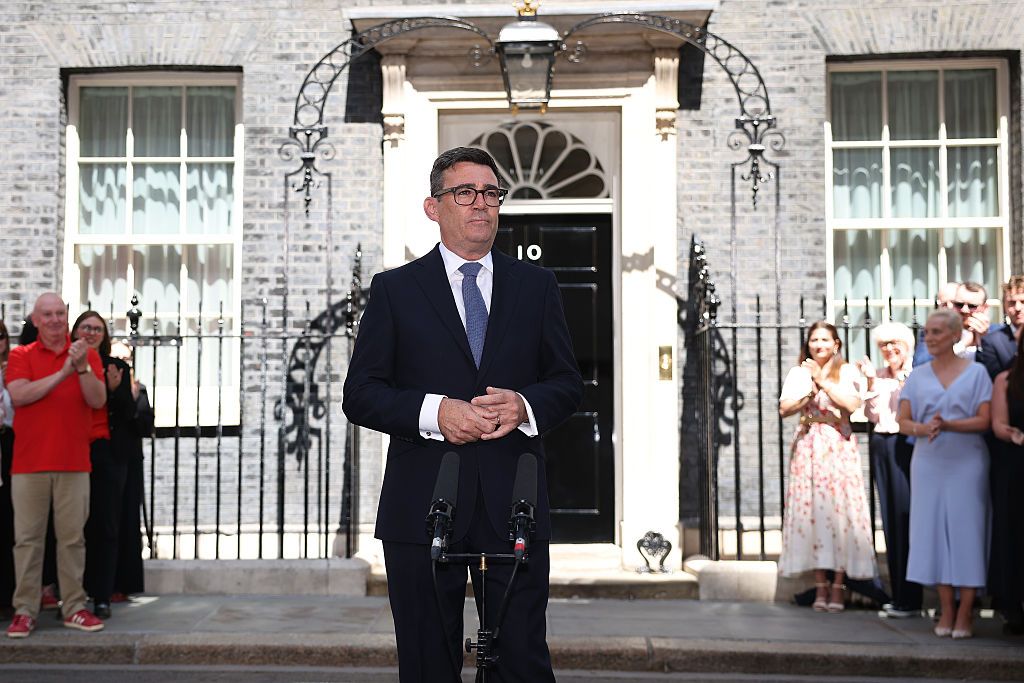
Dear Prime Minister,
As healthcare professionals working across the NHS, public health, infectious diseases, global health, and frontline care, we are writing at a moment of significant political change.
As your new premiership continues, the coming weeks will rightly bring debate about the future direction of the country. As that debate begins, we urge you to put health security at the heart of your leadership.
For us, this is not an abstract foreign policy issue. It is about the patients we care for, the pressure on the NHS, and the kind of country Britain wants to be.
The Covid-19 pandemic showed that infectious diseases do not respect borders. An outbreak that begins overseas can quickly become a concern for families, health workers, and governments here in the UK. We see the consequences when prevention is delayed: more pressure on hospitals, more strain on overstretched services, and greater risks for patients who are already vulnerable.
That is why investment in global health is also an investment in Britain’s own health security.
Stopping diseases at source, supporting vaccination programmes, strengthening surveillance systems, and helping health workers around the world respond quickly to outbreaks are among the most practical steps any government can take to reduce risk at home. These interventions save lives overseas, but they also help prevent infectious diseases from reaching our communities, our GP surgeries, and our hospitals.
Britain has a proud record in this field. Our scientists, health institutions, and NHS workforce have helped lead the world on vaccines, disease surveillance, outbreak response, and global health partnerships. That leadership has protected people far beyond our shores, while also strengthening the UK’s own preparedness.
But that leadership cannot be taken for granted.
Recent reductions in global health and development funding risk weakening the very systems that help detect, contain, and prevent outbreaks before they spread. When vaccination programmes are disrupted, when laboratories are under-resourced, when surveillance systems are weakened, and when trusted local health workers are left without support, the consequences do not remain contained within national borders.
As healthcare professionals, we know that prevention is always better than crisis response. It is safer, more effective, and cost-efficient to stop an outbreak early than to respond once it has already spread. The same principle applies globally as it does in the NHS: early action saves lives and reduces pressure on services.
We are therefore calling on you to make a clear commitment that a future government under your leadership would:
Treat global health investment as a core part of the UK’s national health security strategy.
Protect and strengthen Britain’s role in vaccination, disease surveillance, outbreak response, and pandemic preparedness.
Rebuild confidence in the UK’s international health partnerships, including with countries and communities on the front line of infectious disease threats.
Recognise the expertise of NHS staff, diaspora health workers, researchers, and public health professionals in shaping Britain’s global health policy.
Ensure that decisions on international development and health funding are guided by the evidence that prevention abroad protects patients at home.
This should not be a political issue. It is a practical question of whether Britain is prepared for the health threats of the future.
We believe the UK can be safer, stronger, and more confident when it works with others to stop infectious diseases before they spread. We also believe that health workers have an important role to play in making that case clearly and credibly to the public.
As you set out your priorities for the country, we urge you to recognise that a healthy world is essential to a secure Britain.
Yours sincerely,
The Healthy World, Secure Britain coalition
Dr Oliver Koch, Consultant Infectious Diseases Physician, Regional Infectious Diseases Unit, Edinburgh, NHS Lothian.
Professor Onn Min Kon, Respiratory Physician and the Lead Clinician for the TB service, Imperial College London/St Mary's Hospital
Dr Jessica Potter, Consultant, Respiratory Medicine and TB, University College London / North Middlesex University Hospital
Professor Aubrey Cunnington, Honorary Consultant in Paediatric Infectious Diseases, Imperial College London / Imperial College Healthcare Trust
Dr Arshad Rizvi, NHS and private GP, London
Professor James Seddon, Consultant in Paediatric Infectious Diseases, Imperial College London, St Mary's Hospital
Dr Louisa Pollock, Consultant in General Paediatrics and Paediatric Infectious Diseases, NHS Greater Glasgow & Clyde
Professor Kirsty Le Doare, Professor of Vaccinology and Immunology, City St George's University of London
Professor Emma Thomson, Director of the MRC, University of Glasgow Centre for Virus Research (CVR)
Dr Ruud Nijman, Consultant Paediatric Emergency Medicine, St. Mary's Hospital